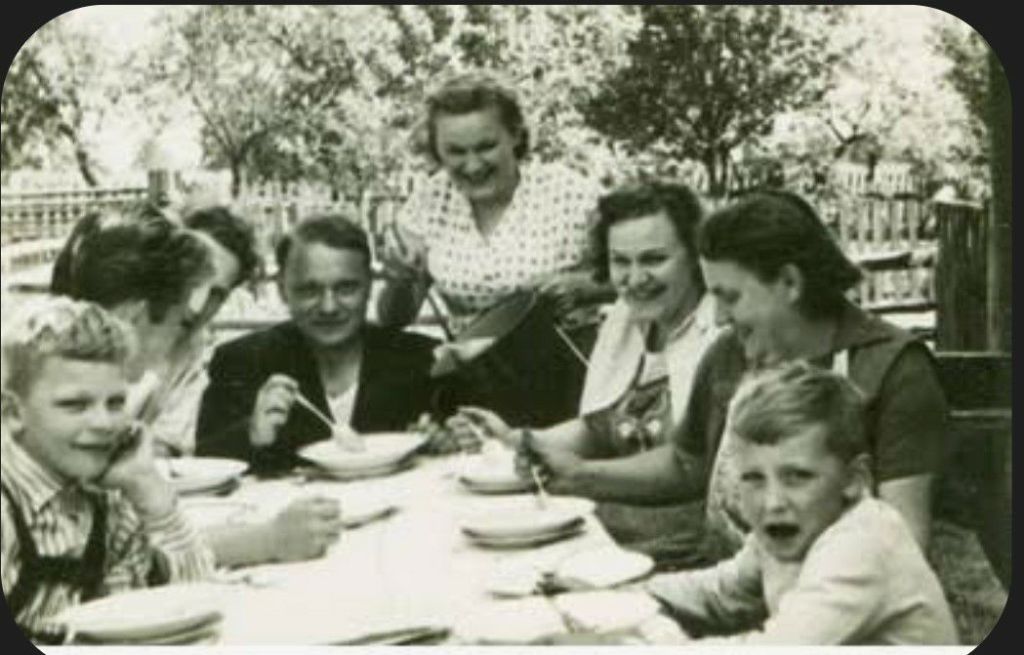
The Native Language of Love
There is a rare gift some parents give their children, and it has nothing to do with money, education, or opportunity.
They give them conversation.
When parents are phenomenal at conversation, they give a child something very rare:
a mind that is not afraid of itself,
a heart that is not afraid of words,
a faith that is not afraid of questions and
a identity formed in dialogue, not silence.
Those homes tend to produce adults who process through language, seek understanding, not just answers. They value depth over noise and feel most alive when truth is explored together.
If you grew up this way, you may not have realized how unusual it was.
Conversation becomes invisible to those who are raised inside it.
It feels normal. Natural. Necessary.
Until one day, you notice a huge chasm happens when it is gone.
I remember evenings and weekends with family and friends sitting on the front porch, talking about the Word of God, gardening, life, marriage, and children. No topic was off limits. We talked over meals, listening to the crickets at night, mesmerized by lightning bugs, savoring every ounce of conversation.
I miss the sound of those voices, and I cherish them as much as I cherish our conversation today. I am rich because of it.
People raised in homes rich with conversation often experience a special kind of grief later in life when marriages are emotionally thin, when partners are not curious, dialogue is shallow or unsafe and the inner life is ignored.
The grief is often misunderstood.
They are not missing entertainment.
They are not missing constant talking.
They are missing their native language of love.
For some people, love is expressed through service.
For others, through touch.
For others, through loyalty or time.
But for me, conversation is not small talk.
It is how I connect, how I feel known, how I feel respected and
how I feel spiritually alive.
When dialogue disappears, something essential disappears with it.
And here is something I have come to understand with time.
My parents did not just teach me to talk.
They taught me how to think, how to examine myself, how to reason with faith, how to hold complexity
and how to listen.
They taught me that questions are not threats.
That ideas can be explored without fear.
That truth is something you walk toward together.
That is why I write the way I do.
That is why I reflect the way I do.
That is why I care about ethics.
That is why I care about truth.
This is not accidental.
This is inheritance.
This is their legacy living inside me.
So I carry one gentle question with me now — not to answer quickly, but to keep.
In that home full of conversation…
Was there ever truly famine?
I think not. The table was spread to overflow. Enjoyed by everyone who sat at it.
 hiswordsarelikecandy.com
Leave a comment